Commodity Capital AG, founded in 2009, is an independent, FINMA-regulated asset manager based in Zug, specializing in commodity-based global asset management. Our funds use an active management strategy, focusing on opportunities in the commodity markets without following any benchmark or index.
The portfolio management team's expertise lies in the economic and geological analysis of commodity projects, with a particular focus on junior and exploration mining companies. With years of experience and insights, the team is supported by a global network of geologists, brokers, and industry leaders. This network ensures direct access to international commodity markets and enables the identification of unique investment opportunities.
As a signatory to the UN Principles for Responsible Investment (PRI), we integrate environmental, social, and governance (ESG) considerations into our strategies, emphasizing sustainable value creation and effective risk management.
High Expertise – Transparency – Flexibility – Consistent Controlling
Transparent, sustainable, innovative and unique products. This is what Commodity Capital AG stands for. We are your partner in investments in the mining sector.
We provide updates on developments in resources, mining companies, fund-related news, as well as upcoming dates for webinars, lectures, and road shows.
Zwischen Sicherheitsbedürfnis und Renditechancen – wie strukturierte Einstiegsstrategien Anlegern den Weg an den Aktienmarkt erleichtern
Wenn Sicherheit den Einstieg blockiert
Viele Anleger wissen, dass ihre Aktienquote zu niedrig ist. Der Einstieg bleibt trotzdem aus, meist nicht aus ökonomischen, sondern aus psychologischen Gründen. Wie ein strukturierter Einstieg über den Rohstoffsektor diese Hürde abbaut, ohne auf Renditechancen zu verzichten, zeigt ein Praxisbeispiel aus der Beratung.
Die langfristige Überlegenheit von Aktien gegenüber den meisten klassischen Anlageformen gilt in der Kapitalmarktforschung als gut dokumentiert. Dennoch zeigt die Beratungspraxis seit Jahren ein anderes Bild: Viele Anleger erkennen zwar die Notwendigkeit einer höheren Aktienquote, scheuen jedoch den konkreten Einstieg.
Dieses Spannungsfeld lässt sich weniger mit ökonomischen als vielmehr mit verhaltenswissenschaftlichen Faktoren erklären. Verlustaversion, Unsicherheit über den "richtigen" Einstiegszeitpunkt und die Furcht vor kurzfristigen Kursrückgängen führen dazu, dass rationale Anlageentscheidungen häufig aufgeschoben werden. Gerade in Deutschland ist diese ausgeprägte Sicherheitsorientierung seit Jahrzehnten ein prägendes Merkmal des Anlegerverhaltens.
Für Finanzberater bedeutet dies, dass nicht allein die Qualität einer Investmentidee über den Beratungserfolg entscheidet. Ebenso entscheidend ist die Frage, wie sich emotionale Einstiegshürden reduzieren lassen, ohne auf die langfristigen Renditechancen des Kapitalmarktes zu verzichten.
Rohstoffe profitieren von strukturellen Wachstumstreibern
Besonders deutlich wird diese Herausforderung im Rohstoffsektor. Dabei sprechen zahlreiche fundamentale Entwicklungen für eine langfristig steigende Bedeutung dieser Anlageklasse.
Die globale Elektrifizierung, der Ausbau erneuerbarer Energien, der wachsende Bedarf an strategischen Metallen für Digitalisierung, Künstliche Intelligenz und Infrastrukturinvestitionen sowie begrenzte Minenkapazitäten sorgen für ein Umfeld, das rohstoffnahen Unternehmen langfristig attraktive Wachstumsperspektiven eröffnet.
Spezialisierte Aktienfonds wie der Commodity Capital Global Mining Fonds (A0YDDD) oder der Structured Solutions Next Generation Resources Fonds (HAFX4V) ermöglichen Investoren eine gezielte Beteiligung an diesen strukturellen Entwicklungen. Dennoch zeigt die Erfahrung aus der Beratungspraxis, dass nicht die Attraktivität des Sektors selbst das größte Hindernis darstellt. Vielmehr stellt sich vielen Anlegern die Frage, ob gerade jetzt der richtige Zeitpunkt für ein Aktieninvestment ist.
Das eigentliche Risiko ist häufig das Nicht-Investieren
Diese Fragestellung verdeutlicht ein grundlegendes Dilemma privater Kapitalanlage. Während Anleger versuchen, den optimalen Einstiegszeitpunkt abzuwarten, entstehen Opportunitätskosten, die langfristig häufig schwerer wiegen als zwischenzeitliche Kursschwankungen.
Historisch betrachtet wurden größere Vermögenszuwächse selten durch perfektes Timing erzielt, sondern vielmehr durch konsequentes Investiertbleiben über längere Zeiträume. Gleichwohl bleibt das sogenannte Sequenzrisiko – also die Möglichkeit unmittelbar nach dem Einstieg deutliche Kursrückgänge zu erleben – für viele Investoren emotional belastend.
Hier setzt ein strukturierter Investitionsansatz an, der den Zielkonflikt zwischen Sicherheitsbedürfnis und Renditeorientierung entschärfen kann.
Eine Brückenstrategie zwischen Anleihe- und Aktieninvestment
Der Structured Solutions Resource Income Fonds (A2AT4F) verfolgt einen Ansatz, der sich insbesondere für sicherheitsorientierte Anleger eignet. Der Fonds investiert überwiegend in kurz- und mittelfristige Anleihen von Unternehmen aus dem Bergbau- und Rohstoffsektor und ermöglicht damit eine Beteiligung an der Branche bei vergleichsweise moderaterem Risikoprofil als ein reines Aktieninvestment.
Dadurch entsteht eine Art "Brückeninvestment": Anleger partizipieren bereits am Rohstoffsektor, ohne unmittelbar die volle Volatilität eines Aktienportfolios tragen zu müssen.
In Kombination mit einem systematischen Vermögensaufbau kann daraus eine überzeugende Einstiegsstrategie entstehen.
Kapitalmarktpsychologie trifft Portfoliostruktur
Ein Praxisbeispiel verdeutlicht diesen Ansatz.
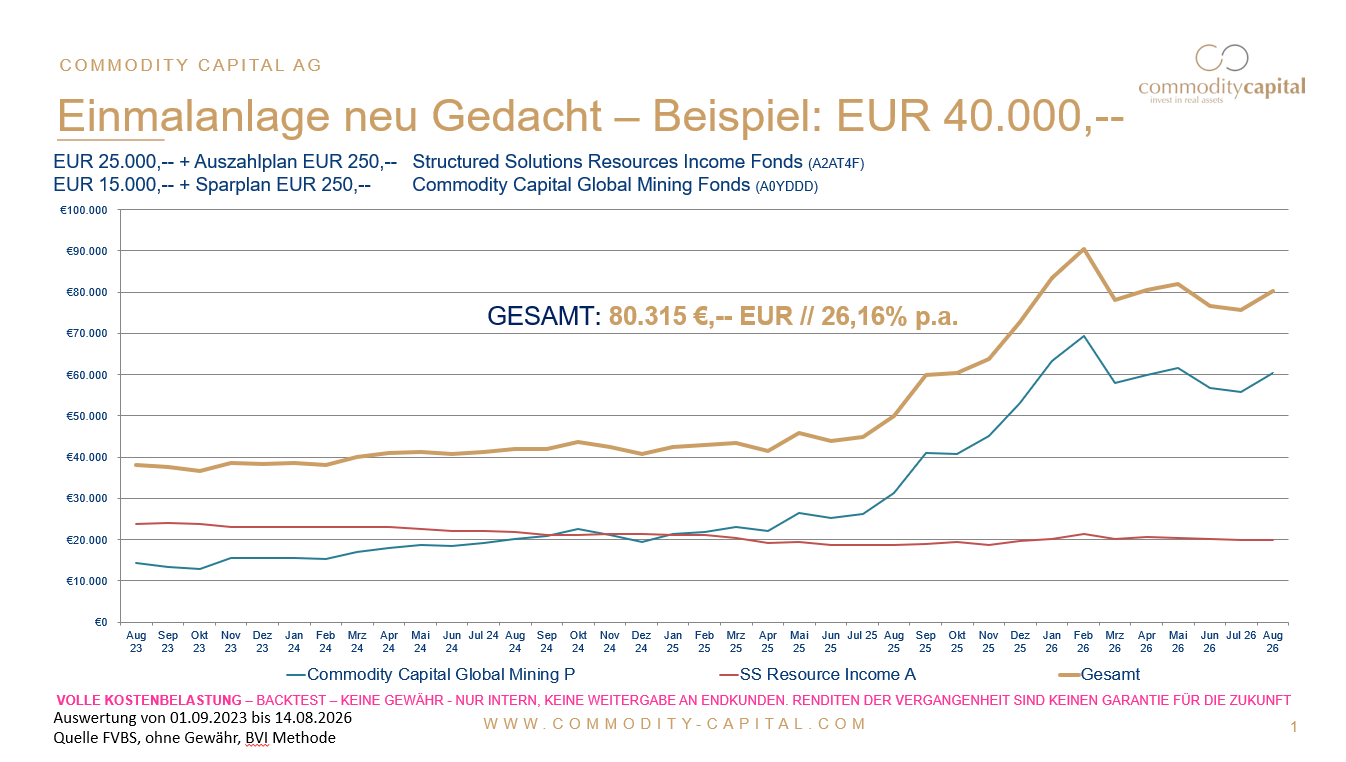
Bei einer Investitionssumme von 40.000 Euro werden zunächst 25.000 Euro im Structured Solutions Resource Income Fonds angelegt. Parallel investiert der Anleger 15.000 Euro unmittelbar in den Commodity Capital Global Mining Fonds.
Aus dem Resource Income Fonds wird gleichzeitig ein monatlicher Auszahlplan über 250 Euro eingerichtet. Diese Beträge fließen automatisiert als Sparplan in den Aktienfonds.
Aus Portfoliosicht erfüllt diese Konstruktion mehrere Funktionen gleichzeitig.
Der Anleger ist unmittelbar vollständig investiert und muss keine Liquidität ungenutzt auf dem Konto belassen. Gleichzeitig reduziert die sukzessive Umschichtung in den Aktienfonds das subjektiv empfundene Einstiegsrisiko. Durch die regelmäßigen Käufe kommt zusätzlich der Cost-Average-Effekt zum Tragen, wodurch sich Kursschwankungen über den Investitionszeitraum glätten können.
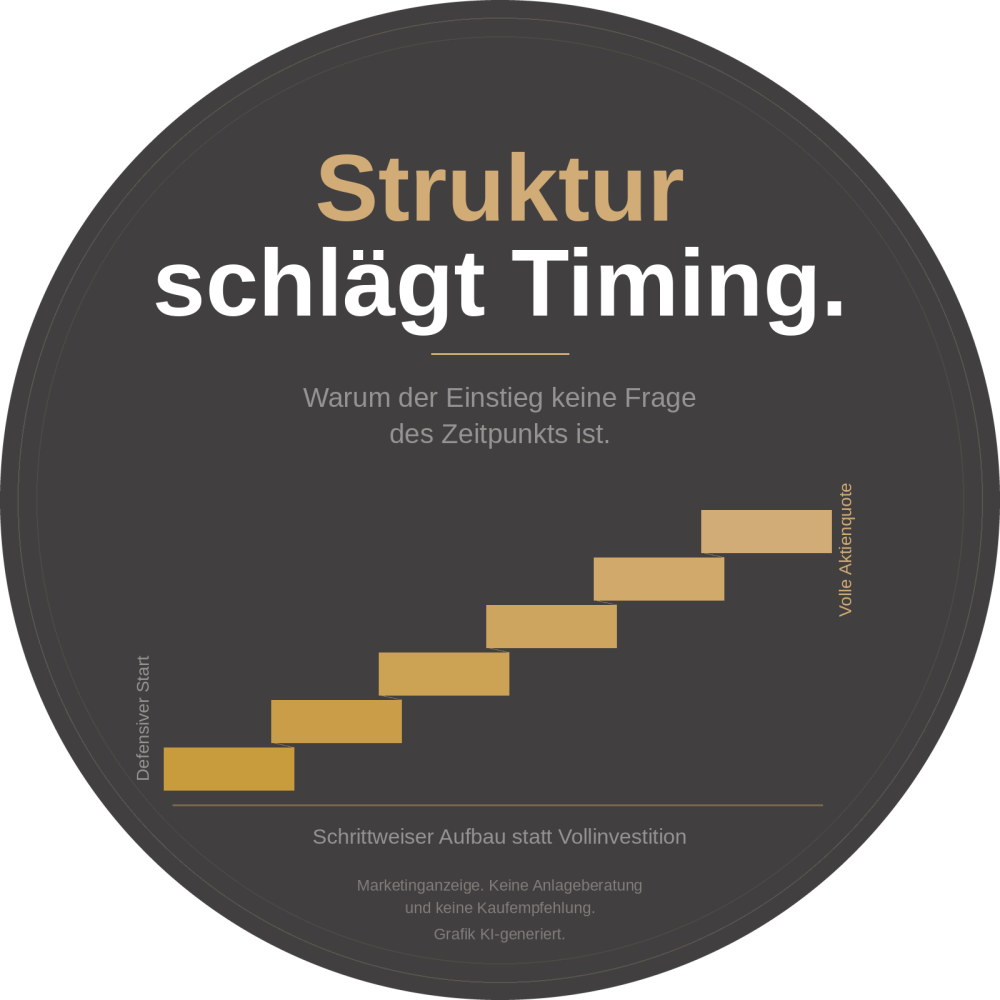
Vor allem aber verändert sich die Aktienquote nicht sprunghaft, sondern kontinuierlich. Für viele Anleger ist genau diese Dynamik psychologisch deutlich leichter nachzuvollziehen als eine sofortige Vollinvestition.
Historische Ergebnisse unterstreichen den Ansatz
Ein Blick auf die historische Entwicklung dieser Modellstrategie zeigt, dass sich der defensive Portfolioanteil zunächst nur langsam reduziert, während die Aktienposition kontinuierlich anwächst.
Die historische Entwicklung dieser Strategie zeigt ein interessantes Bild: Während das Investment im Structured Solutions Resource Income Fonds nur langsam zurückgeht, entwickelt sich das Aktieninvestment im Commodity Capital Global Mining Fonds – unterstützt durch die kontinuierlichen Sparraten – nach einer anfänglichen Schwächephase sehr erfreulich.
Das Gesamtergebnis hätte in den vergangenen drei Jahren eine durchschnittliche Wertentwicklung von 23,70 % p.a. erzielt – nach Kosten einschließlich des üblichen Ausgabeaufschlages. Bemerkenswert dabei ist, dass rund zwei Drittel des Anfangsinvestments zunächst in einem überwiegend anleiheorientierten Fonds investiert waren und lediglich ein Drittel direkt in Aktien.
Auf Basis der vergangenen drei Jahre hätte die kombinierte Strategie – nach Kosten einschließlich des regulären Ausgabeaufschlags – eine durchschnittliche Wertentwicklung von 23,70 % p.a. erzielt.
Bemerkenswert ist dabei weniger allein die Rendite als vielmehr deren Ausgangspunkt: Rund zwei Drittel des ursprünglichen Anlagevolumens waren zunächst in einem überwiegend anleiheorientierten Fonds investiert, lediglich ein Drittel entfiel unmittelbar auf Aktien. Das Beispiel zeigt eindrucksvoll, dass eine vorsichtige Portfoliostruktur keineswegs im Widerspruch zu attraktiven langfristigen Renditechancen stehen muss.
Die moderne Anlageberatung bewegt sich zunehmend an der Schnittstelle zwischen Kapitalmarkttheorie und Verhaltensökonomie. Kunden benötigen heute nicht ausschließlich überzeugende Investmentargumente, sondern vor allem Anlagestrategien, die ihren individuellen Präferenzen und ihrem Sicherheitsbedürfnis Rechnung tragen.
Gerade strukturierte Einstiegsmodelle können dabei helfen, emotionale Hürden abzubauen, ohne langfristige Renditeziele aus den Augen zu verlieren. Die Kombination aus dem Structured Solutions Resource Income Fonds und dem Commodity Capital Global Mining Fonds illustriert diesen Ansatz beispielhaft: Sie verbindet eine defensiv geprägte Ausgangsposition mit einem systematischen Aufbau einer Aktienallokation und schafft so einen nachvollziehbaren Weg in einen langfristig aussichtsreichen Markt.
Für Berater eröffnet sich damit die Möglichkeit, Anleger dort abzuholen, wo sie sich tatsächlich befinden – nicht bei ihrer theoretischen Risikobereitschaft, sondern bei ihrem realen Entscheidungsverhalten. Gerade in einem Marktumfeld, das von Unsicherheit und erhöhter Volatilität geprägt ist, kann dieser Ansatz den entscheidenden Unterschied zwischen vertagter Entscheidung und erfolgreicher Vermögensanlage ausmachen.
05.06.2026 | reading time
Rohstoffe im Aufwind – Chance für Anleger?
Viele verbinden Rohstoffe aktuell mit steigenden Energiepreisen. Doch der spannendere, langfristige Trend spielt sich bei Edel- und Industriemetallen ab: Gold, Silber, Kupfer oder Lithium profitieren von wachsender Nachfrage – insbesondere durch Technologie und Energiewende – bei gleichzeitig begrenztem Angebot.
Viele verbinden Rohstoffe aktuell mit steigenden Energiepreisen. Doch der spannendere, langfristige Trend spielt sich bei Edel- und Industriemetallen ab: Gold, Silber, Kupfer oder Lithium profitieren von wachsender Nachfrage – insbesondere durch Technologie und Energiewende – bei gleichzeitig begrenztem Angebot.
💡 Was bedeutet das für Investoren?
-> Gold und Silber konnten in den letzten Jahren bereits starke Wertzuwächse erzielen
-> Noch dynamischer: Minenaktien, vor allem Small- und Midcaps („Junior-Minen“)
-> Spezialisierte Fonds in diesem Bereich haben den Markt teils deutlich outperformt
🚀 Warum das Thema gerade jetzt spannend ist:
-> Knappheit treibt Preise -> Hohe Margen bei Minenunternehmen -> Politisch stabile Förderländer bieten zusätzliche Sicherheit
👉 Fazit: Rohstoffe sind weit mehr als nur ein kurzfristiger Trend – sie könnten ein zentraler Baustein für langfristig orientierte Portfolios sein.
🔎 Mehr Insights & konkrete Investmentansätze im vollständigen Artikel von Fondsexclusiv
Diese Seite verwendet Cookies und Drittanbieterdienste. Sie haben hier die Möglichkeit diese (auch einzeln) zu akzeptieren oder abzulehnen. Weitere Informationen in unserer Datenschutzerklärung.
Session-Cookie & Eigener Cookie
Wird benötigt, damit die von Ihnen gewählte Website-Spracheinstellung, die Validierung via csrf() in Web-Formularen erfolgen sowie der Status des Logins festgehalten werden können. Mehr Informationen finden Sie in unter https://getkirby.com/docs/guide/kirby-and-privacy.
Darüberhinaus speichert dieser Session-Cookie die von Ihnen gewählte Website-Spracheinstellung.
privacy_accepted: Damit wird festgehalten, dass Sie den Cookie-Banner bestätigt haben (Speicherdauer: 1 Jahr). — acceptedSources: Damit wird festgehalten, welche Cookie-Einstellung Sie akzeptiert haben (Speicherdauer: 1 Jahr).
Google Maps
Wird benötigt, damit die Google Maps-Karte auf der Website dargestellt wird. Mehr Informationen finden Sie in unserer Datenschutzbestimmung unter "Google Maps".
Apple Maps
Wird benötigt, damit die Apple Maps-Karte auf der Website dargestellt wird. Mehr Informationen finden Sie in unserer Datenschutzbestimmung unter "Apple Maps".
Mapbox
Wird benötigt, damit die Mapbox-Karte auf der Website dargestellt wird. Mehr Informationen finden Sie in unserer Datenschutzbestimmung unter "Mapbox".
Google reCAPTCHA
Wird benötigt, damit Kontaktformulare vor automatisierten Bots geschützt werden. Mehr Informationen finden Sie in unserer Datenschutzbestimmung unter "Google ReCAPTCHA".
Google Analytics
Wird verwendet, um Besucherverhalten und Statistiken festzustellen. Wir nutzen diese Daten um die Qualität und Relevanz unserer Inhalte zu verbessern. Mehr Informationen finden Sie in unserer Datenschutzbestimmung unter "Google Analytics".
Matomo
Wird verwendet, um Besucherverhalten und Statistiken festzustellen. Wir nutzen diese Daten um die Qualität und Relevanz unserer Inhalte zu verbessern. Mehr Informationen finden Sie in unserer Datenschutzbestimmung unter "Matomo".
Sendinblue
Wird benötigt, um das Anmeldeformular für den Newsletter darzustellen. Mehr Informationen finden Sie in unserer Datenschutzbestimmung unter "Sendinblue".
Mailchimp
Wird für Mailchimp benötigt. Mehr Informationen finden Sie in unserer Datenschutzbestimmung unter "Mailchimp".
Jameda
Wird benötigt, um Bewertungen vom Webportal Jameda anzuzeigen. Mehr Informationen finden Sie in unserer Datenschutzbestimmung unter "Jameda".
Facebook Pixel
Wird für Facebook Pixel benötigt. Mehr Informationen finden Sie in unserer Datenschutzbestimmung unter "Facebook Pixel".
Youtube
Wird für eingebettete Youtube Videos benötigt. Mehr Informationen finden Sie in unserer Datenschutzbestimmung unter "Youtube".
Vimeo
Wird für eingebettete Vimeo Videos benötigt. Mehr Informationen finden Sie in unserer Datenschutzbestimmung unter "Vimeo".